Used LCV Market
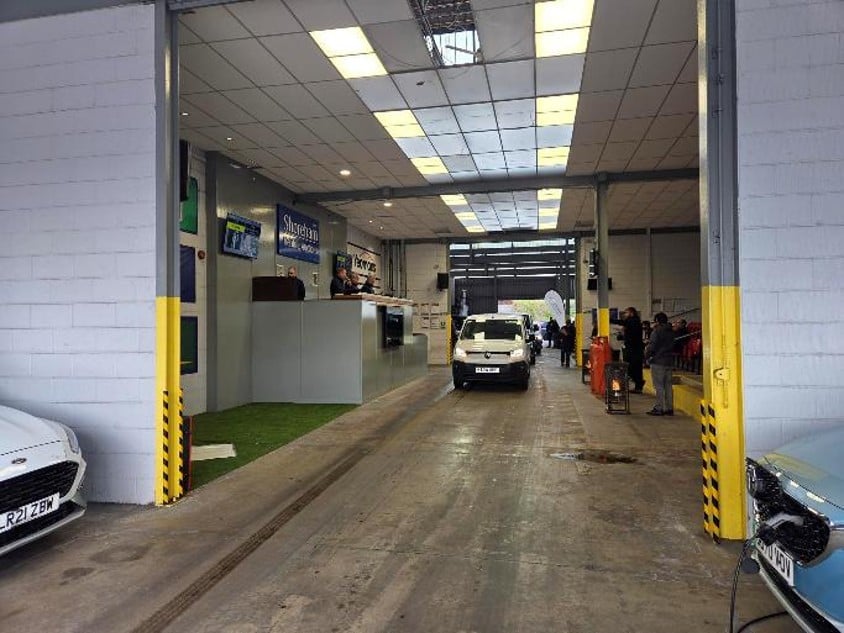
March through to early May continued in the same vein as February where auction sales were concerned. The scarcity of stock has concentrated the efforts of buyers on what little was available. Even a distinct lack of variety in some of our sales hasn’t dampened the appetite of the Trade who seem content to stock whatever is available in lower price range vehicles.
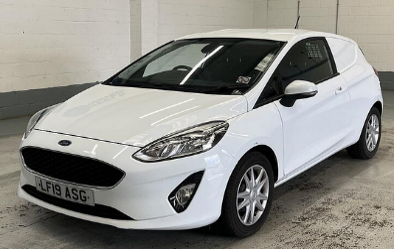
There have been some stand out performances when something different appears, and one such candidate where this is concerned is the Fiesta van. While the Retail market for such a small van would seem limited, the Trade excitement on these is incredible. They often make 30-50% over book values, and when looked at compared to passenger car values, the prices achieved look nonsensical.
The one area of the market that is stagnating is ‘nearly new’. While availability of new vehicle stock was an issue dominating the market for the first few years of this decade, it certainly isn’t a problem now. With Rental companies enjoying some seemingly good deals on new vehicles of late, there are some perceived opportunities to drop young low mileage stock into auction and capitalise on the overall used market shortage. But used vehicle buyers aren’t biting, and much of this high price range, high specification stock is just rotating from week to week.
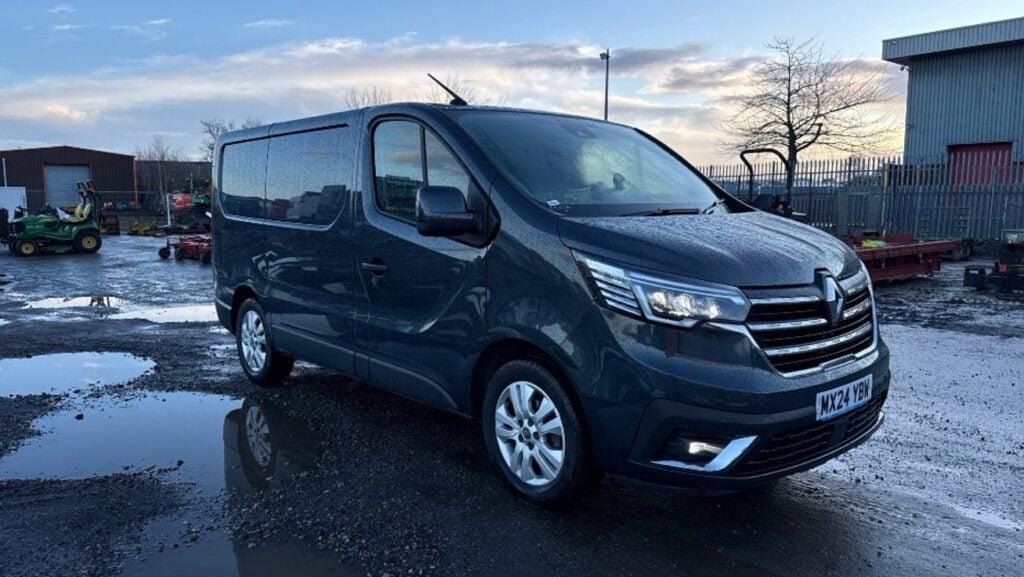
Small vans, often described as car-derived, although many are not, are always thin on the ground due to the distinct absence of registrations during 2020 to 2022, and so attract plenty of attention and healthy bidding. But there is also a shift in Retail attention on these that has taken place over the last few years. Many ‘work from home’ sole traders, decorators, plumbers and the like have gravitated from a small van to a medium van over the last few years, and there are a few motivating factors at play here. Larger vans are now just as economical, and often more practical for families when in Crew or Combi configuration than car-derived alternatives. And of course, there is an increasing desire to be seated higher up while in UK traffic, hence the massive shift from saloon and hatchbacks into SUVs that has taken place in the car world.
Medium and Large van is always where the volumes are in auction, and both sectors hold up very well across most manufacturers at the moment. Only Maxus models seem to struggle at all, and even these tend to get bids when looking value for money against other brands.
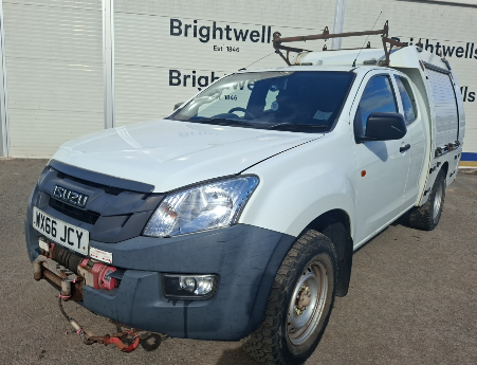
Lower price range 4×4 Pick Ups are mostly sought after, particularly the single and extended cab versions, where many find their way overseas, even with utility bodies on in some cases. Later higher price range ‘Lifestyle’ pickups are patchy though, and a good price certainly can’t be guaranteed.
Will the ongoing high cost of fuel drive more people into used EVs?
Well, the somewhat obvious answer is yes, to a degree. Research from some of the biggest Retail buying portals shows that 4 out of 10 car owners will now consider switching to electric vehicles. 44% of non-EV owners would seriously consider an electric alternative if fuel prices hit or exceed £2.00 per litre. This is the tipping point at which petrol, diesel and hybrid drivers start to consider moving to an EV. However, 29% of respondents said rising fuel prices would not influence their decision to switch.
The Middle East situation has caused huge UK fuel price inflation, with petrol averaging £1.57 per litre and diesel at £1.90 at time of writing, and with diesel in some areas now close to £2.00. For Car and Van dealers previously reluctant to sell EVs there is now more incentive than ever for them to try and meet the needs of cost-conscious motorists by stocking affordable used EVs. Those customers most likely to switch are men, at 58%, motorists aged under 45, at 64%, and households earning more than £60,000, at 67%.
The average ‘3 mile per kwh’ EV user on a cheap overnight home charging tariff could travel for a tenth of the cost of a diesel vehicle running at 35mpg at current fuel prices. A very strong argument if you are at the point where you are considering a change.
With two wars now raging that both have an effect on oil prices and fuel strategy, and a distinct lack of stability in global markets, a degree of prudence in the matter might now be well placed, despite the shortcomings of running an EV for some users.
Used Car Market
The best word to describe the used car market at the moment is sluggish. While the volumes finding their way into auction are steady, the general lack of confidence felt in the market is hitting sales conversion rates, with just 2 out of 3 cars finding a home after their first sale.
This may not sound particularly poor, and indeed auctions converting sales at anything over 70% would be deemed successful in years gone by. But with all the exposure car lots are given to the market now, you would think this could be better. And crucially, the issue with the 1 in 3 cars left behind after the first sale, is that these often become very difficult to sell, usually churning through multiple sales before finding a buyer. The old adage that ‘your first bid is your best bid’, was obviously an unreliable generalisation that couldn’t be disproved if you kept accepting your first bid, but in today’s world of car auction sales it is certainly more likely to be correct.
A brief look at the latest car Retail market data shows that average ‘days to a sale’ now sits at 51 days. This is incredibly long compared to market data from a few years ago, when 30 days to a sale would be deemed ‘about right’, and anything still sat on the forecourt at 60 days would get drastic re-pricing to get it moving. When measured annually this slower turnover can be devastating to dealer profitability, and one wonders whether the increase in dealer margin (the difference between Trade and Retail prices) seen over the last few years is the natural offset for these longer stocking periods.

Lack of a bullet proof service history, or signs of mistreatment shown by interior wear and tear, plus anything remotely requiring paint rectification sends bids plummeting in most cases, and as mentioned in previous reports, it now seems that cherished privately owned examples find their way to Retail via car buying services, bypassing the auctions in many cases.
Trucks and Trailers
Truck sales over the period were slightly affected by the Easter break, with a slowdown in demand over both short Easter weeks. This did not really affect the overall market though where demand remains quite strong.
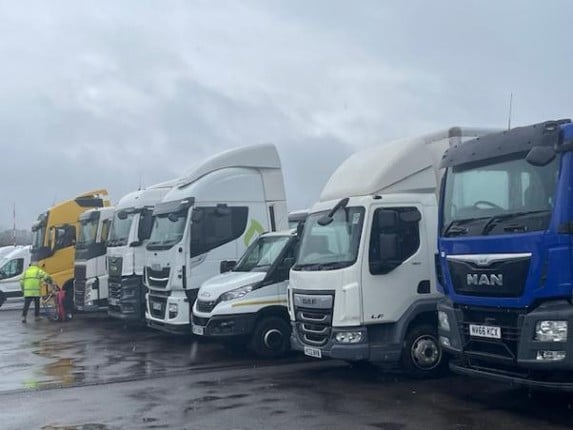
Supply into the auctions has again increased this quarter which, together with the slightly reduced demand has put a little pressure on pricing. As usual though that pressure only really applies to the more normal specifications, such as Boxes, Fridge Boxes and Tractor units all of which are around in abundance. Any of the aforementioned on premium chassis seem to be doing ok though, with just the Iveco and DAF product slowing.
Double drive trucks of any description, apart from RCV’s often see a lot of interest at sale time with very competitive bidding. This usually results in better-than-expected sale prices because although not rare, they are far fewer in number than the standard 4×2 or 6×2 trucks.
This is always very evident in the Tractor unit markets where nearly 90% of the stock on offer this month were of the 6×2 variety. Thus, any double drive 6×4’s will always attract a lot of interest. Sticking with the Tractor unit markets, one that definitely does not see ANY interest is that of the CNG truck. Usually on an Iveco chassis although, even if on a premium chassis like Scania the results are no different.
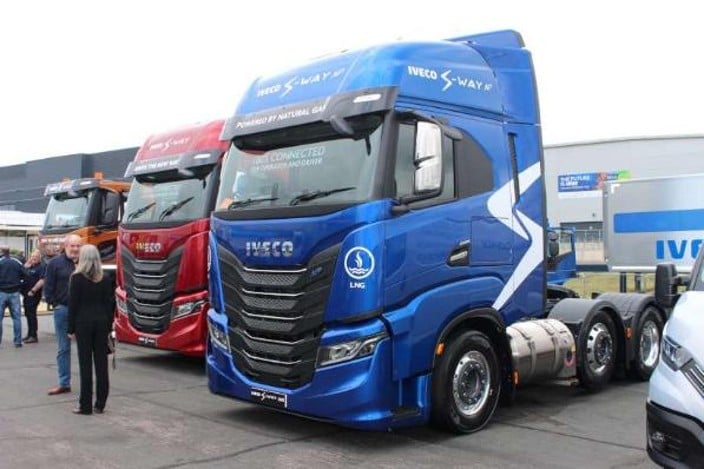
Very little, if any interest comes from the sales hall, with vendors usually withdrawing them from sale and taking them home again. These trucks have to be target sold directly to an end user, because a normal, forecourt led sales environment does not exist.
The used trailer market has seen little change this period, other than the aforementioned Easter break in trading. With the volumes now around, that did little to help the pricing of used trailers which have again hardened this month. An older scrap Curtain side Tri Axle of any manufacture is now valued at around £2,500, selling for scrap or storage generally.
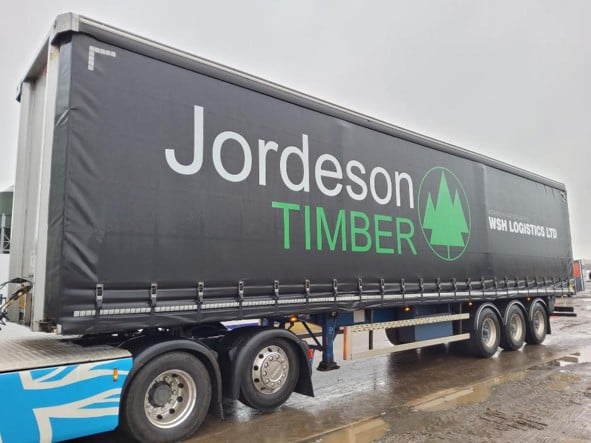
Newer stock, so anything newer than 8 years old is selling well though for further use, such as the 4-year-old Curtainsider seen above at Brightwell’s Auctions. A new set of curtains will see this example retailing at up to £20,000, so a sale price at auction is likely to be in the order of £6,000 – £7,000.
From the Rostrum
With the markets showing a distinct upturn after the Easter break, rostrum management really got into its stride. With the trade becoming reluctant to buy anything that needed work, it was up to us to persuade them otherwise!! Working with the auctioneers, we were able to convert around 80% of all stock offered over the period, something that would simply not happen without attendance on the rostrum. The buyers WANT a decision and will usually bid more if that facility is there.
Cars remained harder work than LCVs on the rostrum generally but, this is largely a pricing issue. With the shift from CAP Clean to Average now being the expected norm, vendors are still expecting to see CAP Clean prices. Unless the cars are absolutely ready to retail, these sorts of prices are no longer attainable. Realism is the key to getting stock sold, where rostrum management can also then generate more bidding, giving rise to stronger sale values.