
Pre-Registrations on the rise
Pre-registrations or Forced Registrations as they are also known have long been a feature of the UK motor industry. The practice of registering new vehicles even though they don’t have a buyer helps manufacturers balance factory outputs against demand and regional new vehicle sales targets, while at dealer level, financial incentives to hit volume targets in a given period can also lead to pre-registration exercises where essentially a new vehicle will then be marketed as a used vehicle with delivery mileage and one owner already showing on the V5.
UK pre-registrations reduced dramatically from 2020 due to manufacturing restrictions, and with the growth in the manufacturers adopting the Agency model for their dealer networks, where new vehicle stock remains the property of the manufacturer until sold, you would think that bulk pre-registrations would largely be a thing of the past. But it seems they are now on the rise again, with some commentators predicting that 2026 could see a return to the days where used vehicle forecourts were awash with ageing new vehicles sitting on older plates waiting for a new home.
There are two main fallouts from this that affect both the New and Used vehicle market negatively.
The first is that many ageing pre-registrations are priced aggressively to be ‘washed out’, thus impacting values on genuine later low mileage vehicles, and then creating a knock-on effect back through older versions of the same.
The second is that visible pre-registration activity often signals a green light for Short Term Rental businesses to cut harder and harder deals with the manufacturers that are obviously under pressure, increasing their discount terms and shortening minimum holding periods. If the deals are good enough to warrant shortening replacement cycles, the number of late low mileage ex-rental vehicles appearing in the market increases dramatically with the one inevitable result, that being a snowballing of used vehicle value reductions moving back through to older plates and higher mileages too.
A quick Autotrader search shows a potential 3258 pre-registered LCV examples currently advertised, some are over 2 years old. The true figure available in the dealer network could easily be double this.
It’s true to say that a lot of the current pre-registration activity is on BEV vehicles, which makes sense given the ZEV mandates, but there are plenty of deals around on ICE variants too. Definitely something to watch as the year rolls on.
Toyota gets closer to production of revolutionary Solid-state EV batteries
Toyota continues to push toward commercial production of all-solid-state batteries (SSBs), a next-generation battery technology that replaces the liquid electrolyte in conventional lithium-ion packs with a solid material. In collaboration with partners like Idemitsu Kosan, Toyota has begun construction of a pilot-scale solid electrolyte plant, a key component of these batteries, with completion expected around 2027. This marks one of the most concrete steps yet toward real-world production and supports Toyota’s broader goal of equipping electric vehicles with solid-state packs by the end of 2027.
The benefits of solid-state technology include higher energy density for longer ranges, much faster charging, and significantly improved safety and longevity. Toyota believe the new batteries could last decades, retaining most of their capacity for up to 40 years. However, despite promising lab results and pilot production, commercial mass production still faces challenges, including manufacturing scale-up and cost competitiveness compared with today’s lithium-ion cells.
While overall this is particularly good news for the LCV and HGV world, as improvements like these will make BEV vehicles far more viable than they currently are, there is also the difficulty of emerging technology making current versions with conventional battery technology far less desirable or even redundant in some cases.
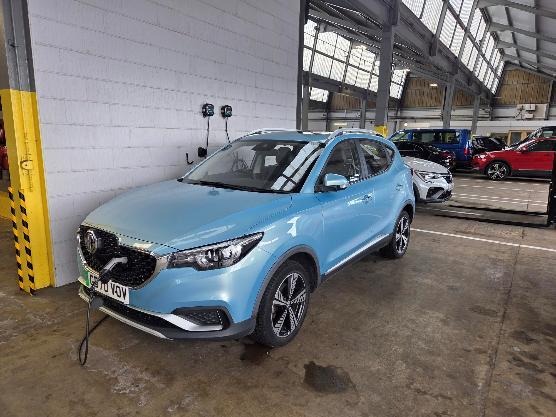
With used vehicle residual values already being one of the biggest challenges in the EV world, the successful introduction of SSBs could easily further upset the apple cart for everything else in the market.
Used LCV Market
With January auction prices riding high across the board, the valuation guides hardly moved at all going into February, and in some cases, they increased on favoured models.
Early February would usually see auction volumes increase dramatically as post-peak de-fleets kick in across rental and flexi-rent businesses and while there have been an increased number of later low mileage LCVs about because of this, the highly sought after, good pedigree older lower price range vehicles have all but dried up.
This has been good for most XBG clients, as this lower price range stock makes up the majority of our sale sections, and we really haven’t seen any weakness in the market apart from on the most heavily damaged vehicles that require panel replacements or very difficult repairs.
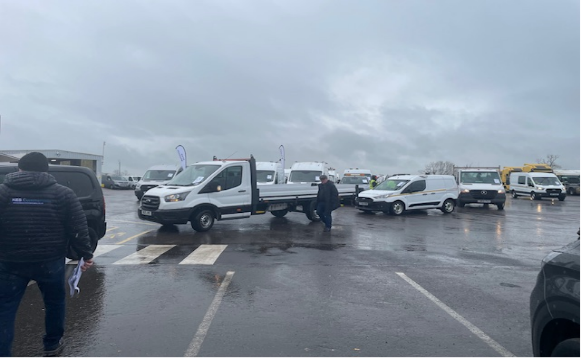
Another feature of February has been the unremitting rain which has made auction attendance a less than pleasant experience, especially if you are intent on inspecting every vehicle before it hits the auction hall. This is where a decent amount of work done before a sale increases a buyer’s chances of having a successful day. Auction inspection reports are always available online the day before a sale, and a bit of time spent isolating the lots you want to bid on is time well spent. As experienced sellers it is often obvious to us that many buyers don’t do this and end up with a few surprises, often due to the wet weather, when their purchases get delivered following the sale.
Used Car Market
Car trading continues to be steady, and by no means startling. One observation is that a steadily increasing number of poorly maintained cars have been appearing in the auction halls of late. These are often main dealer part exchanges and one wonders whether the established car buying services such as Motorway, We Buy Any Car, plus the myriad of others available, are now so well established that they are able to pick off the best cars at higher prices than dealers are willing to pay in part exchange, leaving the dealers to handle the dross.
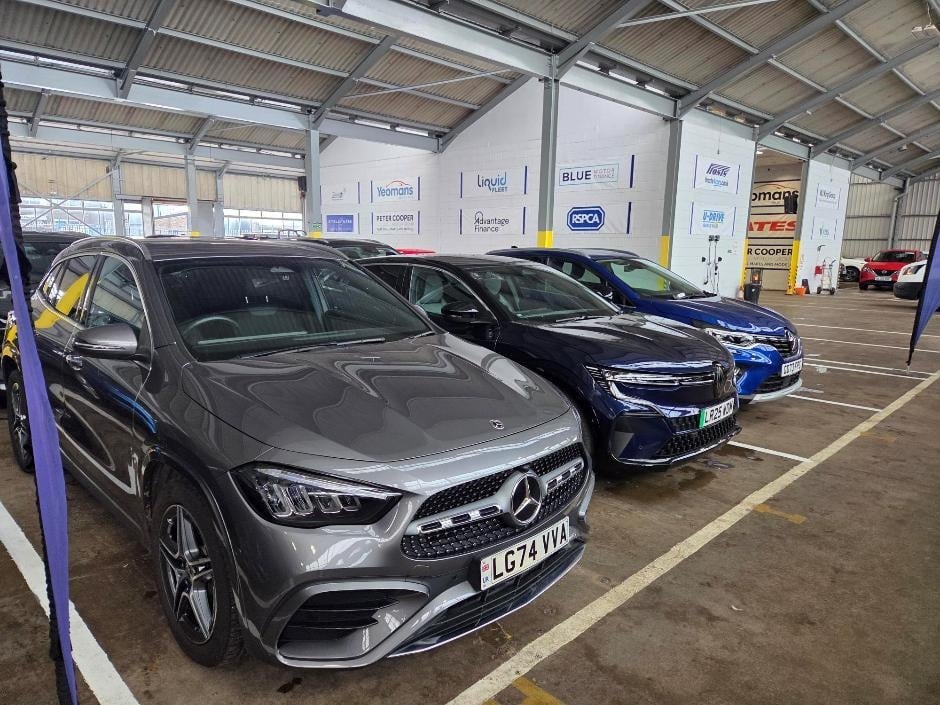
In the ex-fleet world, cars hitting the auctions are always desirable due to regular servicing, relatively hide standards of body condition due to end of contract penalties, and a lower number of owners. The only let down is the lack of variety, and with electric cars becoming more and more abundant in fleets now, there is often not much to get the discerning private buyer excited about in auction catalogues.
Trucks and Trailers
There were no real changes to the truck and trailer markets during January and February, with no noticeable surge in volumes to upset pricing. It is true that a fairly large volume of former Royal Mail 7.5-ton Boxes have appeared around the UK recently, on either DAF or Iveco chassis. But being over 10 years old they have not affected the sales of newer trucks as they do not fit the same retail profile.
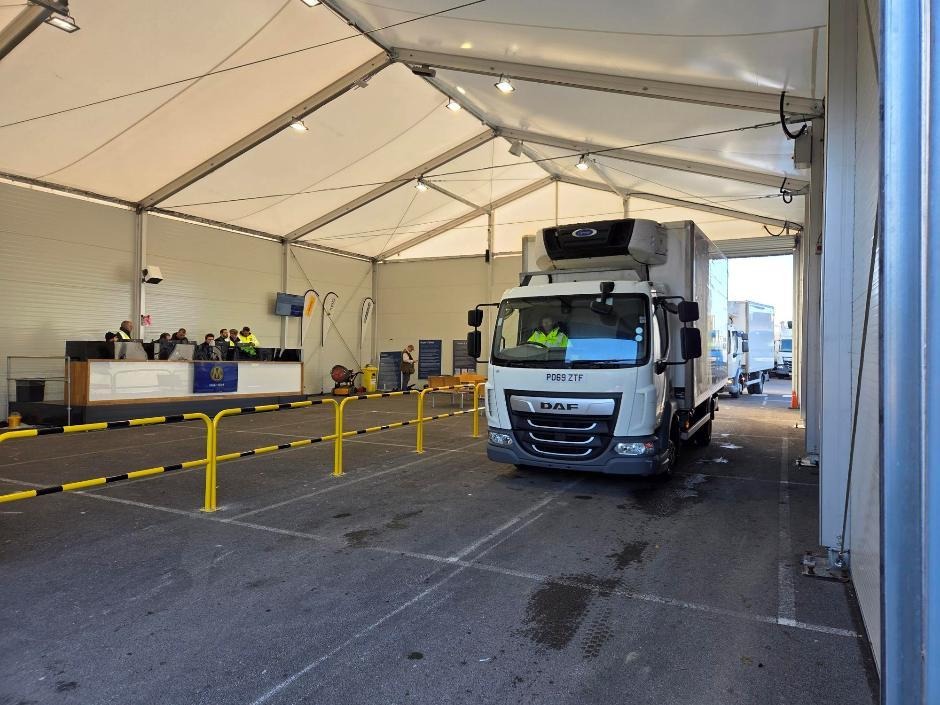
Just about all sectors of the used truck markets are currently experiencing low volume returns into the auction markets, which is really helping to keep prices strong. The best money remains in the tidy, lower mileage Euro 6 stock where some exceptionally competitive bidding can be seen. Untidy trucks and those with high miles and/or mechanical issues are suffering again though; no trader wants to buy problems currently, focusing instead on quick retail sales and back to market for more stock.
Fridge Boxes are about in reasonable quantity at the moment, prices are steady, but any additional volume could cause a drop in sale prices.
Tippers generally are less numerous now so, any tidy examples that do appear sell well, especially if equipped with a crane. Skip loaders have bounced back after some relatively large volumes entering the markets late last year; they have now all sold and with no fresh stock around, any that do appear are keenly bought.
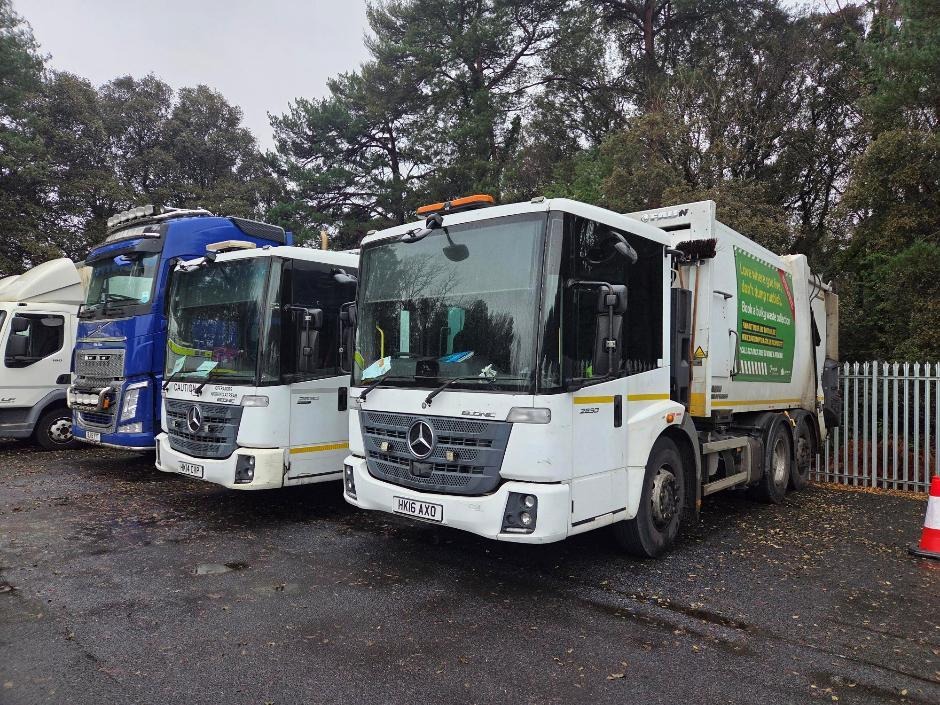
Sale of specialist trucks such as tankers, Vac Ex, car transporters etc are faring well again this month with strong prices being paid to own them. RCV’s remain quiet though, with the 2 x 2016 Econics seen below only fetching £4500 each.
This period saw a marked increase in the volume of trailers appearing at auction, particularly older examples. As a result, prices have come under pressure across the board, unless they are less than 5 years old when they will make sensible money.
Most of the returns seen this month at auction are older than 10 years, which have very little value left in them unless they are very specialist, such as tipping trailers, tankers or skeletal.
From the Rostrum
After a rather frantic January where sales were extremely busy and buoyant, February saw a return to more normal trading conditions from the rostrum. Our Auction Managers report that the trade are in the mindset of ‘trying not to pay too much’ for stock this month, with some old tricks going on to try and control the bidding. Not with our client stock, which is carefully managed from the rostrum, to prevent that sort of skullduggery from the trade!
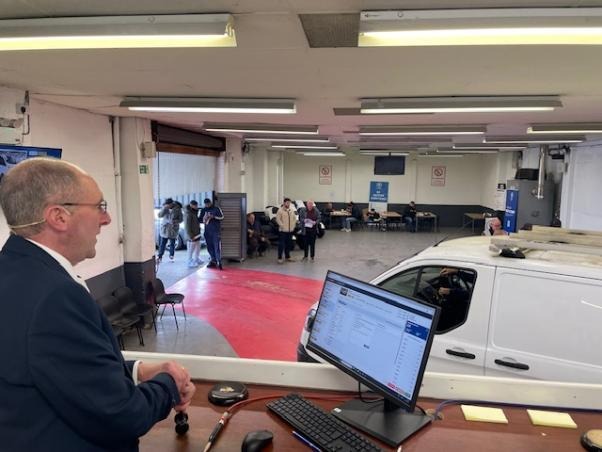
The amount of rostrum ‘profit’ has crept up this period as a result, with more vehicles needing our help to get them past the post and sold. Prices remain very strong though, because of this rostrum management and presence.
Vans are still easier to sell than cars, as the retail demand for cars is not so strong. This reflects the buying public’s demand at the forecourts which, although far better than late last year could still be improved a bit, with more financial and economic confidence.